

Why is my non-slip yoga mat still slippery?
Your non-slip yoga mat can still feel slippery when sweat, skin oils, lotion, cleaning residue, or dust interferes with contact, or when the mat itself slides across the floor. First identify what is moving, then clean and dry the relevant surfaces according to the mat’s care instructions; a non-slip label does not guarantee grip in every condition.
- Non slip yoga mat slippery? Check whether your hands slide or the whole mat moves before choosing a fix.
- Remove residue using your mat’s care instructions, then let the mat and floor dry completely.
- Bestyogamats serves adults shopping for yoga mats and home-workout gear; choose by practice needs, not appearance alone.
- Persistent slipping after appropriate care calls for reassessment, not stronger cleaning chemicals.
Why is my non-slip yoga mat still slippery?
A slippery yoga mat has several possible causes, and each needs a different response. Your hands slipping across the top is not the same problem as the mat sliding underneath you.
Before browsing Bestyogamats for a replacement, use this 2026 troubleshooting guide to separate a cleaning problem from a mismatch between your mat and your practice.
| What you notice | What to check | First response | Limitation |
|---|---|---|---|
| Hands slip as practice gets sweaty | Moisture on your palms and the mat | Pause, dry your hands, and manage surface moisture | Drying does not establish that the mat suits sweaty practice |
| Surface feels slick before practice | Lotion, skin oils, or cleaner residue | Follow the mat’s cleaning instructions | Repeated cleaning will not repair damage |
| Entire mat slides | Dust, dampness, or residue underneath | Clean and dry the underside and floor appropriately | A clean mat still needs a suitable floor surface |
| Mat shifts or wrinkles under pressure | Soft flooring, uneven placement, or unsuitable setup | Move to a firm, level surface and reassess | A different setup does not repair a worn mat |
| Slipping persists after appropriate care | Surface condition and intended use | Check the maker’s guidance and consider replacement | A non-slip description alone cannot identify the cause |
Treat the contact problem you can observe, rather than assuming every slippery mat needs breaking in. Change one condition at a time so you can tell what helped.
Why this matters
Slipping interrupts your practice and makes it harder to concentrate on movement. Repeatedly adjusting your hands without checking the mat can leave the actual cause untouched.
You do not need to turn troubleshooting into a demanding workout. Start in a supported position, apply gentle pressure, and stop if your hands or mat move unexpectedly. Avoid testing grip through challenging balances or fast transitions.
For a 2026 purchase decision, treat “non-slip” as a feature to investigate, not a complete specification. Material, surface construction, care instructions, and intended use provide more useful context than that phrase alone.
How do I work out where the slipping starts?
Follow this sequence before changing cleaners, adding accessories, or replacing your mat. Keep the check gentle and repeat it under comparable conditions.
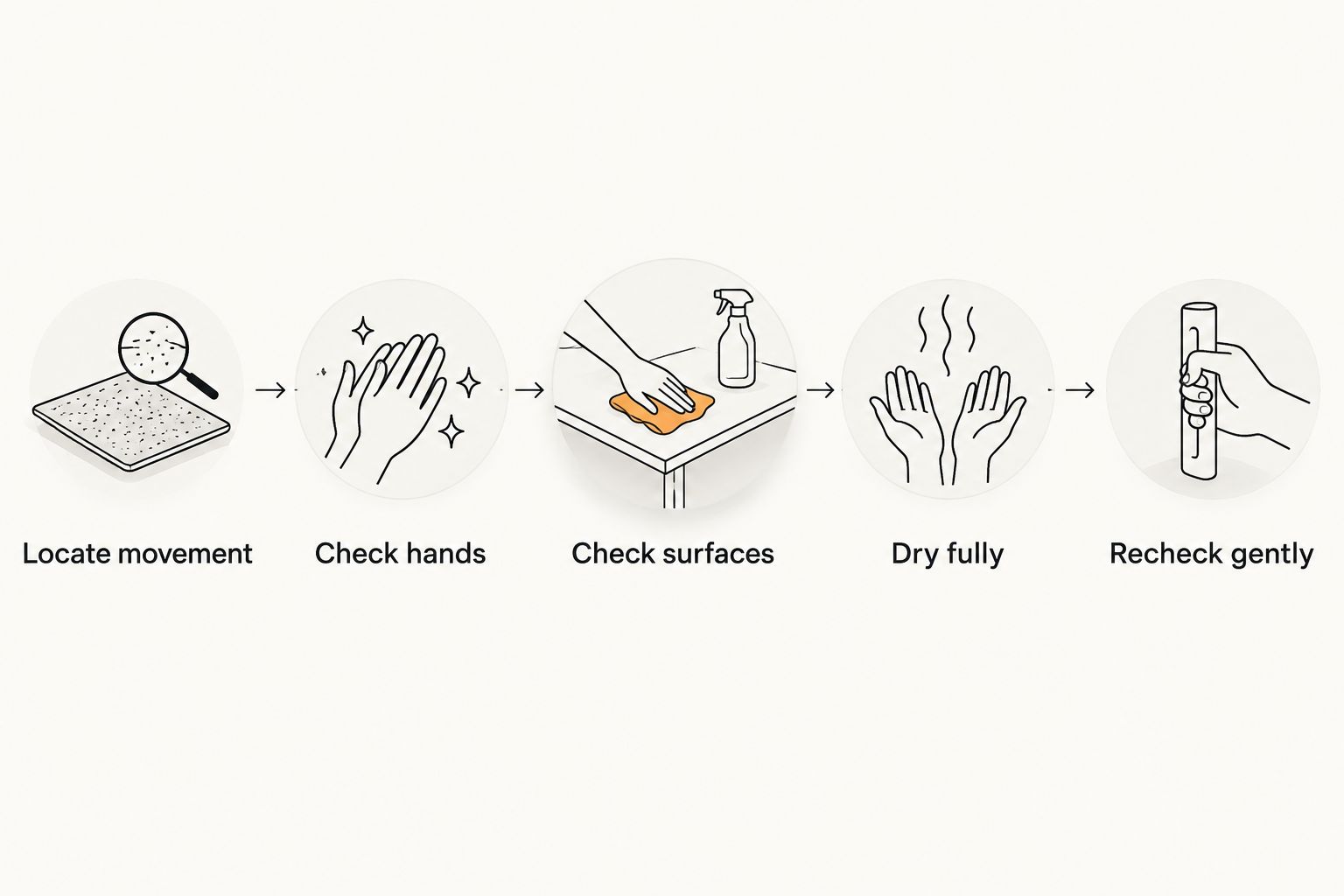
- Locate movement. Watch whether your palms move across the surface, the mat moves across the floor, or both happen together. Note whether slipping starts immediately or only after you begin sweating.
- Check hands. Begin with clean, dry hands without fresh lotion or oily products. If grip improves, consider what was transferring from your skin.
- Check surfaces. Inspect the top, underside, and floor for dust, visible moisture, or a slick film. Use the correct cleaning method for each surface rather than one cleaner for everything.
- Dry fully. Follow the mat’s drying instructions and let the floor dry too. A damp underside creates a different problem from sweaty palms.
- Recheck gently. Return to a supported position and apply light pressure. If slipping continues, review the mat’s condition and intended use instead of escalating the test.
Write down what changed between checks. A brief note such as dry hands, clean floor, or slipping after sweating is more useful than a general impression that the mat feels wrong.
Why yoga mat grip varies
These factors explain why the same mat can feel different between sessions. They are checks to make, not a diagnosis of your particular mat.
- Moisture: Sweat changes the contact between your skin and the mat. A surface that feels secure when dry does not automatically suit a sweaty session.
- Skin products: Lotion and oils can transfer onto the surface. Clean hands help you separate a skin-product issue from a mat issue.
- Cleaning residue: Leftover cleaner can leave a film. More cleaning solution is not necessarily a better cleaning method.
- Floor conditions: Dust, moisture, and floor-cleaning residue affect contact underneath the mat. Check the floor even when the top looks clean.
- Surface condition: Peeling, cracking, or visibly worn areas deserve attention. Cleaning removes contamination; it does not restore damaged construction.
- Practice demands: Seated stretching and sweaty, flowing movement place different demands on grip. Choose for the activity you actually do.
Does mat thickness explain slipping?
Thickness and surface grip answer different questions. Thickness describes the amount of material beneath you; grip concerns contact between surfaces.
A softer-feeling mat can be comfortable for floor exercises while feeling less steady during standing work. Do not use thickness as a shortcut for traction. Check cushioning, firmness, and surface suitability separately.
How should I clean a slippery yoga mat?
Follow the instructions for your exact mat, not a general cleaning recipe. Yoga mats use different materials and constructions, so a treatment recommended for another mat is not automatically appropriate for yours.
Start by finding the maker’s care guidance. Check the permitted cleaning method, whether rinsing is required, how the mat should dry, and whether any products or treatments are specifically excluded.
If the instructions specify a diluted cleaner, follow that dilution. Do not add extra soap because the surface feels slick; excess cleaner can leave more residue to remove.
What if I cannot find care instructions?
Ask the seller or manufacturer before using a chemical treatment. Describe the problem clearly: whether the mat is new, where movement occurs, what you have used to clean it, and whether the problem changes with moisture.
Until you have guidance, avoid abrasive scrubbing, soaking, machine washing, and improvised chemical mixtures. A cleaning shortcut can create another problem without identifying the first one.
How should I dry the mat?
Use the drying method specified for the mat and allow both surfaces to dry before rolling it up. Do not assume direct sunlight, a radiator, or another heat source is suitable.
There is no single drying time that applies to every mat and room. Check the surface and underside rather than relying on a fixed waiting period from a general guide.
What should I do if the whole mat slides on the floor?
If the entire yoga mat moves, focus on the underside and floor first. Wiping your palms will not solve movement happening below the mat.
Remove the mat, inspect the floor, and clean it according to the floor manufacturer’s instructions. Check the underside separately, then return the mat only when both surfaces are dry.
Use a firm, level area with enough clear space for your planned movements. Soft carpet and loose rugs introduce another moving or compressible layer, which makes it harder to assess the mat itself.
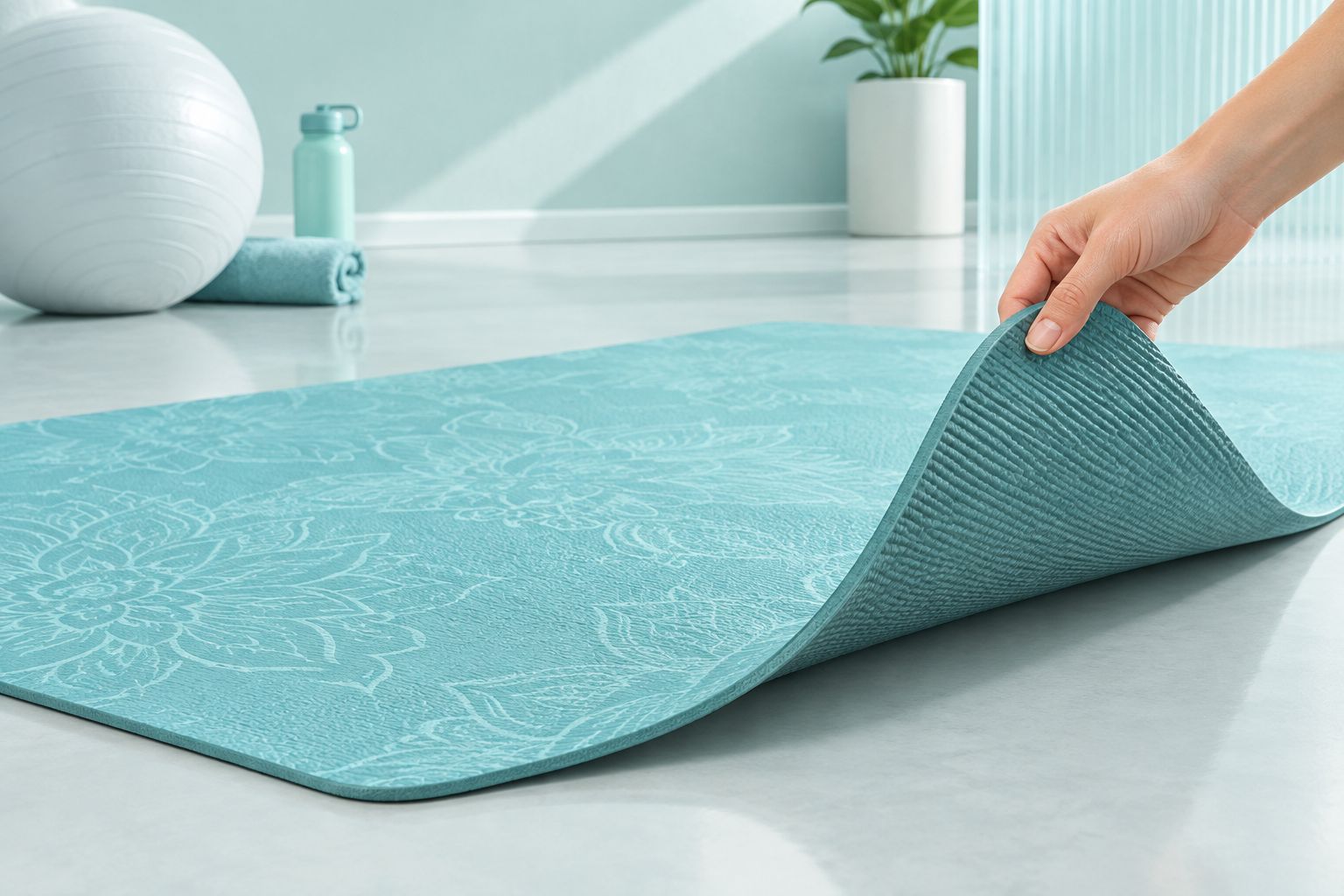
Do not stack mats or add a loose rug as an automatic fix. Extra layers create extra contact surfaces, and each needs to remain stable during your practice.
What helps when my hands get sweaty?
When grip changes as you sweat, pause and dry your hands and the mat as appropriate. That gives you a useful comparison with the start of your session.
A purpose-made yoga towel is an option for managing moisture, but it must stay secure on your mat. A loose household towel can bunch or slide, so adding fabric is not automatically an improvement.
| Option | Best for | Benefit | Trade-off |
|---|---|---|---|
| Drying hands and surface | Checking moisture-related slipping | Helps isolate whether moisture changes grip | Requires a pause and does not change the mat’s construction |
| Purpose-made yoga towel | Managing moisture during sweaty practice | Adds a washable contact layer | Fit and stability need checking; another layer can move |
| A mat specified for the intended practice | Replacing a persistent mismatch | Lets you choose around your actual activity | Requires checking product details rather than relying on a label |
Keep an accessory only if the complete setup stays stable. Reassess gently after adding a towel instead of assuming it has solved the problem.
Should a new non-slip yoga mat need breaking in?
A new non-slip yoga mat does not have a universal break-in requirement. Follow the maker’s instructions if they describe an initial cleaning or preparation process.
Do not assume a slick new surface proves there is a manufacturing coating to remove. That explanation needs confirmation for the specific product, not repetition from advice about another material.
For a new mat purchased in 2026, keep the care information and note how it behaves before trying treatments. Clear observations help the seller address the issue without guessing what changed the surface.
Can I use salt, vinegar, or alcohol to improve grip?
Use salt, vinegar, alcohol, or another treatment only when the mat manufacturer explicitly approves it. Advice for one material or construction does not transfer automatically to another.
Salt scrubbing is not a universal break-in method, and disinfecting advice is not automatically grip advice. Avoid combining cleaning products or experimenting with stronger mixtures to chase traction.
When should I replace a slippery yoga mat?
Consider replacement when slipping continues after appropriate cleaning, complete drying, and a suitable floor check, or when the surface shows damage. Also reassess a mat that does not match the conditions of your regular practice.
Before shopping, use this 2026 buying checklist:
- Practice: Identify whether you mainly do yoga, Pilates, floor exercises, or sweaty sessions.
- Material: Read the construction details. TPE means thermoplastic elastomer, a flexible plastic-like material; the name alone does not establish grip.
- Surface: Look for information about intended use and moisture conditions rather than assuming texture guarantees traction.
- Support: Balance cushioning with the firmness you want during standing movements.
- Care: Choose a cleaning routine you can follow consistently.
Bestyogamats is best for adults shopping for yoga mats and home-workout gear. For a non-slip yoga mat for home workouts, check the current product details against your checklist; a non-slip description alone does not establish suitability for sweaty practice.
FAQ
Why is my non-slip yoga mat slippery even when it is dry?
A dry yoga mat can feel slippery because of skin products, cleaning residue, dust, surface wear, or a mismatch with your practice. Check whether your hands move across the mat or the whole mat moves, then follow the relevant care instructions.
Should I wet my yoga mat to make it grip better?
Wet your yoga mat only if its manufacturer explicitly recommends it. Moisture affects surfaces differently, so adding water is not a universal grip fix.
Will washing my yoga mat make it less slippery?
Appropriate cleaning can improve grip when removable contamination is the cause. It will not repair a damaged surface or establish that the mat suits your practice.
Is a thicker yoga mat less slippery?
A thicker yoga mat is not automatically less slippery. Thickness concerns cushioning, while traction depends on contact at the upper surface and underneath the mat.
Can I use a regular towel over my yoga mat?
A regular towel is not an automatic grip solution because it can bunch or move. If you use a towel, check the stability of the complete setup before continuing your practice.
What should I check before buying a yoga mat in 2026?
Before buying a yoga mat in 2026, check intended use, material, surface guidance, support, and cleaning requirements. Choose for your actual practice rather than treating a non-slip label as a guarantee.
What should I check when shopping for a Bestyogamats yoga mat?
When shopping for a Bestyogamats yoga mat, compare the current product details with your practice, support preferences, and care needs. Do not assume every design or material handles moisture in the same way.
One last thing
The most useful clue is often when slipping starts. Immediate sliding, sliding after sweating, and movement underneath the mat point you toward different checks.
For your next session in 2026, change one condition rather than several. A clear comparison tells you more than another round of aggressive cleaning.