

How to clean a non-slip yoga mat without leaving residue
To clean a non-slip yoga mat without leaving residue, follow its care instructions, wipe with a damp cloth and an approved cleaner only when needed, then remove cleaner with a separate water-dampened cloth and air-dry completely. The key is removing the cleaning solution rather than leaving it to dry on the surface; this 2026 guide explains the process without relying on a universal homemade recipe.
- How to clean a non slip yoga mat: follow its care label, remove cleaner residue, and air-dry completely.
- Use separate cleaning and rinsing cloths so you do not spread soap back onto the mat.
- Bestyogamats serves adults shopping for yoga mats and home-workout gear; check each mat’s individual care instructions.
- Non-slip does not mean compatible with every cleaner, disinfectant, or washing method.
How do you clean a non-slip yoga mat without leaving residue?
Use the least intensive cleaning method allowed by your mat’s manufacturer, then remove the cleaner before drying. A textured surface needs attention around its grooves, but scrubbing harder is not a substitute for rinsing away cleaning solution.
If you are choosing your first mat, Bestyogamats sells yoga mats and home-workout accessories. Cleaning instructions belong on your purchase checklist alongside comfort and grip.
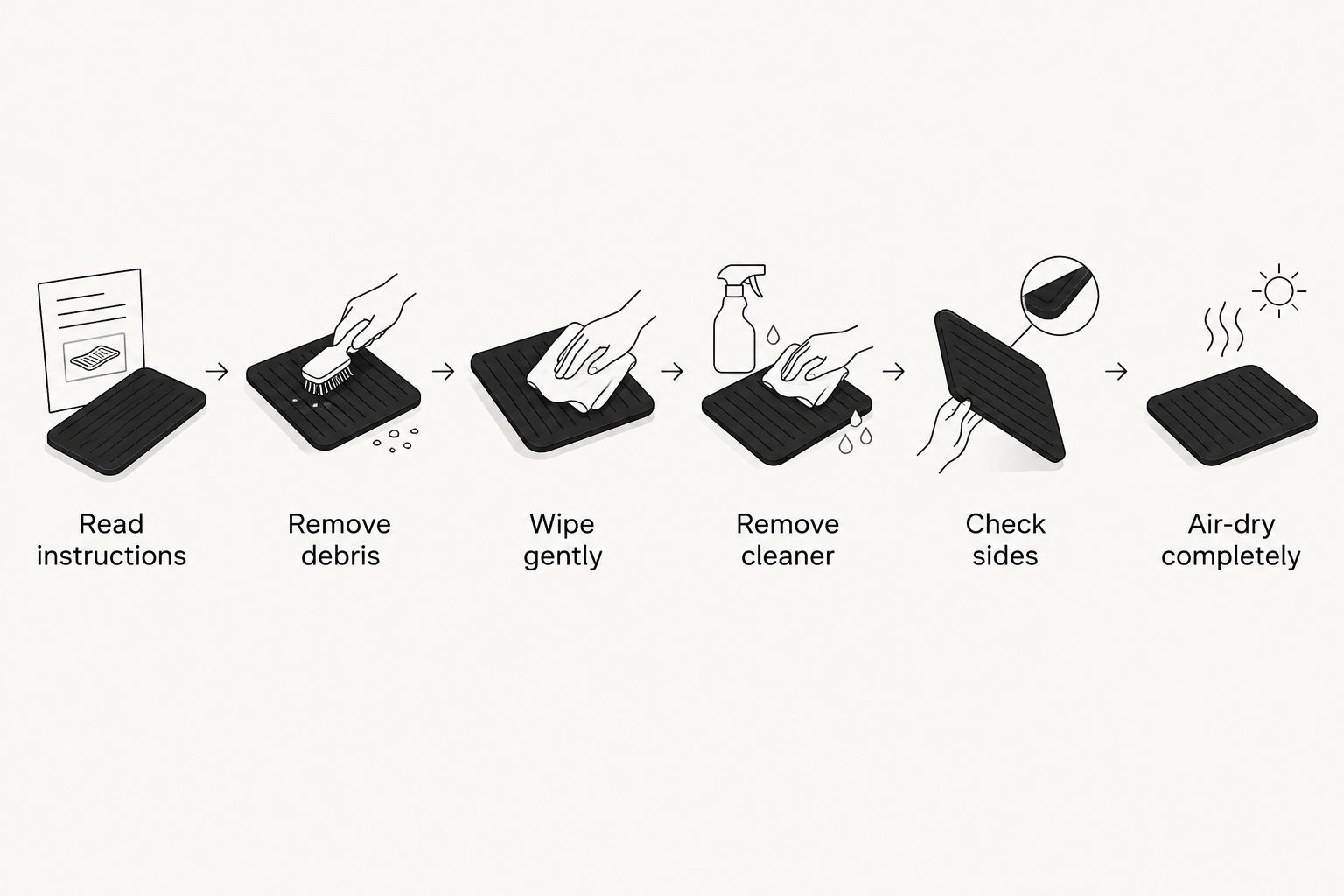
Follow these 6 cleaning steps
- Read the care instructions. Identify the material and any separate surface coating. Check which cleaners, water exposure, and drying methods the manufacturer permits before starting.
- Remove loose debris. Brush away crumbs or loose grit with a soft, dry cloth. This keeps debris from being rubbed across the surface during cleaning.
- Wipe gently. Use a clean cloth dampened with water or the approved cleaning solution. If the directions call for applying cleaner directly to the mat, follow those directions instead.
- Remove the cleaner. Unless the product is explicitly approved as a no-rinse treatment for your mat, wipe again with a separate cloth dampened with clean water. Rinse that cloth as it picks up cleaner.
- Check both sides. Clean the underside as permitted by the care instructions. Place the mat on a clean surface so the freshly cleaned side does not pick up floor dirt.
- Air-dry completely. Follow the approved drying position and keep the mat unrolled until both sides are dry. Do not substitute a heater, tumble dryer, or direct sunlight unless the manufacturer permits it.
Prepare 2 clean cloths: one for cleaning and one for removing the cleaning solution. Keeping them separate makes it easier to avoid carrying soap back onto the surface.
The final check happens after drying, not while the surface is wet. With the mat flat on a clean, dry floor, check for visible film, unusual tackiness, or a slippery feel before returning to your normal practice.
Why this matters
A mat can look clean while still carrying cleaning solution. Fragrance does not prove that cleaner has been removed, and a freshly sprayed surface is not necessarily ready for your hands and feet.
Cleaning and disinfecting are different tasks. Routine cleaning removes dirt and residue; disinfecting requires a suitable product used according to its label, including the stated contact time. A quick wipe does not establish disinfection.
For a 2026 mat-care routine, keep those tasks separate. When disinfection is necessary, confirm that both the mat manufacturer and disinfectant label support the intended use rather than applying a household spray by default.
Which cleaning method should you use?
Choose by the mat’s care directions and the type of mess, not by how strongly a cleaner smells. The following comparison explains the purpose and limitation of each approach; it does not replace material-specific instructions.
| Method | Best for | Advantage | Limitation |
|---|---|---|---|
| Water-dampened cloth | Light surface dirt, where permitted | Adds no detergent to remove | Does not reliably remove every oily mark or disinfect the mat |
| Manufacturer-approved mild cleaner | Dirt that water alone does not remove | Provides cleaning action suited to the stated use | Requires the specified dilution and removal method |
| Cleaner made for the specific mat | Owners whose manufacturer names a compatible product | Gives a defined application process | A yoga-mat label alone does not establish compatibility |
| Compatible disinfectant | Situations requiring disinfection | Addresses a different task from routine cleaning | Needs label directions, contact time, and material compatibility |
Start with the simplest permitted method that addresses the dirt. More cleaner adds more material to remove; it does not automatically produce a cleaner practice surface.
Avoid combining cleaning products. If a cleaner has already been applied, remove it according to its instructions rather than adding a second formula to correct the result.
How should you clean different non-slip mat materials?
Non-slip describes a function, not a single material. TPE, rubber, foam, and coated surfaces do not share one universal washing recipe, and the top layer can require different care from the base.
TPE mats: check water and cleaner restrictions
TPE stands for thermoplastic elastomer, a family of flexible materials. The name alone does not tell you whether a finished mat tolerates soaking, machine washing, or a particular cleaning spray.
Use the manufacturer’s wiping method and approved cleaner. If soaking is not explicitly allowed, do not treat a bathtub wash as the next step after a damp cloth.
Rubber mats: follow the finished mat’s directions
A rubber base does not establish the cleaning requirements of a printed or coated upper surface. Check the instructions for the complete mat rather than relying on advice for rubber generally.
Do not assume that vinegar, alcohol, or essential oils are acceptable because a recipe is described as natural. Compatibility matters more than that label.
Foam and coated mats: protect the practice surface
Foam mats and mats with printed or coated tops need their own care instructions. Avoid abrasive pads and forceful brushing unless the manufacturer specifically recommends them.
A gentle wipe gives you more control than an unapproved soak. If the surface starts peeling, shedding, or changing texture, stop cleaning and assess the damage instead of scrubbing harder.
Why does residue remain after cleaning?
Residue usually calls for a change in the cleaning process, not an extra layer of fragrance. Check these factors before switching products:
- Cleaner concentration: Follow the stated dilution. A stronger mixture leaves more cleaning material to remove.
- Cleaner ingredients: Formulas containing oils, waxes, or conditioning agents deserve particular scrutiny because they are intended to leave material behind.
- Cloth condition: A cloth already holding detergent or fabric-softener residue can transfer it to the mat.
- Surface texture: Grooves and raised patterns need careful wiping so cleaner is not left in recessed areas.
- Removal method: Letting a rinse-required cleaner dry on the mat skips a necessary step.
- Amount of moisture: A dripping cloth makes drying harder to judge, especially when edges or layers remain wet.
For your 2026 cleaning kit, choose cloths that are clean and free of oily treatments. Keep the cloth used for cleaner separate from the cloth used for the final water wipe.
Do not use a fixed soap recipe from an unrelated mat guide. Without the cleaner concentration and the mat’s instructions, a precise-looking dilution is not a reliable recommendation.
What should you do if the mat feels slippery after cleaning?
Stop practice and let the mat dry fully before assessing its grip. Check your hands, the mat’s upper surface, its underside, and the floor separately; movement at one contact point does not identify a problem at another.
If cleaner residue is visible or suspected, repeat the permitted clean-water wiping process with a fresh cloth. Do not immediately add powder, salt, oil, or another cleaner to change the feel.
If the mat stays slippery after approved cleaning and complete drying, look for wear or surface damage. Cleaning does not repair a peeling layer or restore material that has worn away.
How should you dry and store a cleaned yoga mat?
Use the manufacturer’s approved drying position in a ventilated indoor space. Keep the mat away from direct heat and sunlight unless those conditions are explicitly permitted.
Allow air to reach both sides. If you lay the mat flat, use a clean surface and reposition it as needed so moisture is not trapped underneath; if hanging is permitted, use a support that does not crease or stretch it.
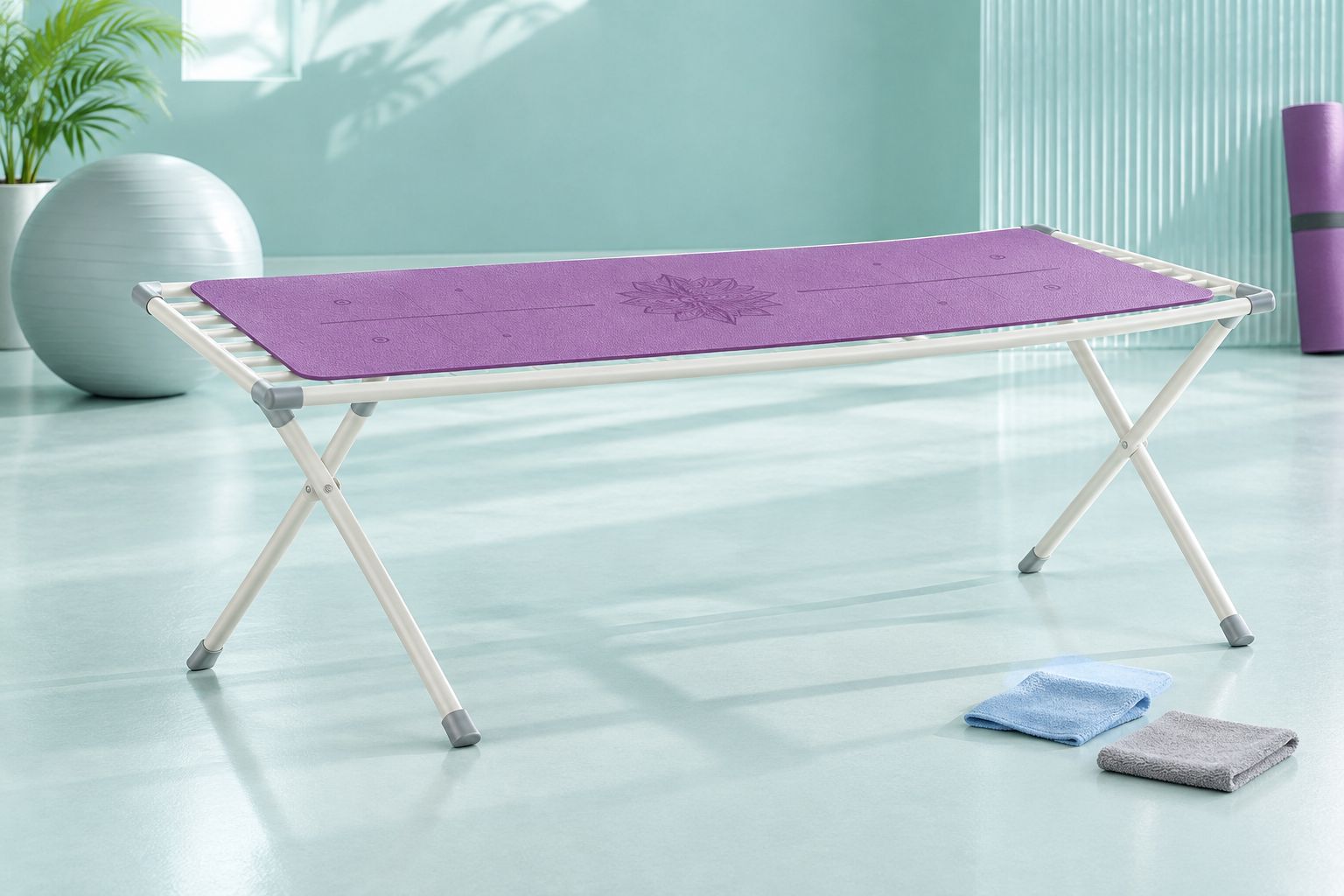
Check 2 sides, plus the edges, before rolling the mat. A dry-looking top does not tell you whether moisture remains underneath.
Store the dry mat according to its instructions. A tightly closed bag is not a drying space, and rolling the mat early hides the areas you still need to check.
What should you check before buying an easy-care mat?
For a 2026 purchase, ask for care instructions before choosing a cleaning product. If you cannot identify the material or approved cleaning method, get that information before experimenting.
A practical buying checklist includes:
- Material: Identify both the base and the surface you touch.
- Routine care: Confirm whether the mat needs wiping, rinsing, or a specific cleaner.
- Drying: Check whether you have space for its approved drying method.
- Workout conditions: Consider the sweat and floor dirt your routine produces.
- Surface care: Check any separate instructions for prints, coatings, or textured finishes.
A non-slip yoga mat for home workouts belongs in that comparison, but the non-slip description alone does not answer those care questions. Ask about cleaning compatibility rather than assuming a familiar product type has familiar instructions.
Bestyogamats is for adults shopping for yoga mats and home-workout gear. The useful purchase decision is the mat whose comfort, intended use, and care requirements fit your routine—not one chosen on an unsupported promise of maintenance-free grip.
FAQ
How do I clean a non slip yoga mat without making it slippery?
Follow the mat’s care instructions, remove any rinse-required cleaner with a separate water-dampened cloth, and air-dry completely. Check the dry surface before resuming practice rather than judging grip while it is wet.
Can I use dish soap on my yoga mat?
Use dish soap only if the mat manufacturer permits that type of cleaner. Follow the specified dilution and remove the soap as directed; do not assume an oily or conditioning formula is suitable.
Is vinegar safe for every non-slip yoga mat?
Vinegar is not a universal yoga-mat cleaner. Use it only when the manufacturer’s instructions permit it for your mat’s material and finish.
Can I clean my yoga mat with disinfecting wipes?
Use disinfecting wipes only when their label and the mat’s care instructions support the use. Follow the required contact time and any residue-removal directions; a brief wipe does not establish disinfection.
How long should I let my yoga mat dry?
Let your yoga mat dry completely on both sides before using or rolling it. There is no single drying time for every material, amount of moisture, and room condition.
Should I wash a yoga mat in the washing machine?
Machine-wash a yoga mat only when its manufacturer explicitly allows it. A washable rug or another washable fitness accessory does not establish that your yoga mat is machine-washable.
How often should I clean my yoga mat in 2026?
Base cleaning frequency on the care instructions, visible dirt, sweat, and whether the mat is shared. Check the mat after practice rather than relying on one schedule for every workout.
Do all Bestyogamats yoga mats need the same cleaner?
Choose a cleaner using the individual Bestyogamats yoga mat’s care instructions, not the store name or non-slip label. Confirm the material and finish before applying a product.
One last thing
Check the cleaning cloth before blaming the mat. A cloth carrying detergent, fabric softener, or an earlier cleaning product can put residue back onto a surface you have just wiped.
Use a fresh cloth for the final permitted water wipe, then let the mat dry fully. That simple separation makes your routine easier to troubleshoot without introducing another cleaning product.